
Ultimate Guide to Company Culture
Definition, strategies, and why it matters
Key Takeaways
- Culture is a business priority. Research shows that 92% of leaders say a healthy culture is essential to organizational success.
- Company culture is how work actually gets done. It reflects shared values, behaviors, and expectations across the organization.
- Leadership has an outsized influence. Organizations with highly effective, engaged leaders can see up to 70% improvement in culture quality.
- Alignment drives consistency. Purpose, values, brand promise, and the employee value proposition (EVP) must reinforce each other.
- Sustainable cultures balance trust and accountability. Organizations that foster psychological safety while maintaining clear performance expectations are more likely to sustain engagement and results.
Introduction
In today’s competitive business landscape, company culture isn’t just a buzzword—it’s a driving force behind sustainable success. The way your organization defines and lives its values, beliefs, and expectations shapes everything from employee engagement to business performance.
But what does it truly mean to build a thriving company culture? How can leaders create an environment where people feel valued, empowered, and motivated to do their best work? And why does culture matter now more than ever?
This ultimate guide will demystify company culture, unpack its impact on business outcomes, and provide actionable strategies for transforming your workplace into a magnet for top talent and high performance. Whether you’re looking to assess your current culture, navigate change, or build a lasting foundation for growth, you’ll find the insights you need to lead your organization forward. Not sure how to get started? BDO’s People, Strategy & Solutions team is here to help.
Company culture drives engagement and performance. Discover practical steps to assess your culture, navigate change, and build a workplace that attracts top talent.
Defining Company Culture
Company culture is the collective set of beliefs, values, and expectations that shape how people interact and work together within an organization. These shared principles define the workplace environment and influence the employee experience at every level. When companies clearly communicate and reinforce their core values, they naturally guide how employees think, act, and collaborate.
Often referred to as “workplace culture,” “organizational culture,” or “corporate culture,” company culture is expressed through common values, but its character can vary widely. What matters most is building a resilient culture that supports both the organization’s goals and the diverse needs of its people. Resilient cultures thrive when leaders instill Deep Trust and High Expectations® across their teams, empowering employees to succeed even as individual needs and skills differ.
Defining company culture is just the beginning. What truly sets a culture apart is how these shared beliefs are lived out day-to-day through purpose, leadership, practices, and relationships. By understanding how culture is embodied across your organization, you can see its impact on everything from employee experience to business outcomes.
At BDO, we know that when your company culture is aligned with your business strategy, it will be:
The Importance of Company Culture
Great Culture Builds Better Organizations
A strong company culture is the foundation of a successful business strategy. In fact, 92% of business leaders say that a healthy culture is essential for company success. Our research shows that organizations with effective cultures consistently achieve superior business results, particularly those that foster Deep Trust and High Expectations® environments.
How does this success happen? When organizations prioritize a well-integrated culture, they empower teams to work together seamlessly, leading to improved collaboration, communication, efficiency, and effectiveness at every level. To drive sustainable growth while putting people first, it’s essential to ensure your culture reinforces a shared purpose and values that people can truly support.
Great Culture Intersects with Purpose and Values
Your company’s purpose and values are the cornerstone of a thriving company culture— one where both the business and its people can excel. When purpose and values are deeply embedded in your culture, they communicate the essence of your organization to customers, employees, and stakeholders in a way that inspires trust and credibility.
There are a number of ways to cultivate a culture that truly reflects your shared purpose and values. The most effective approach will depend on your organization’s unique needs and may involve a combination of strategies tailored to your goals. The best approach for you will vary or may even be a blend of the following elements.
5 Elements of a Thriving Organization
Here are five elements that can help you build a high-performance organization. Having these articulated can equip leaders with the tools and clarity to engage employees within their organization.
Purpose: The motivating force behind what your organization does. Your purpose will answer: why do we exist? What good do we aspire to add to the world?
Values: A set of core beliefs held by a company. Your values will answer: what commitments define our character? What mindsets, norms, and behaviors do we prize most highly?
Brand Promise: The experience customers can expect by interacting with your company. Your brand promise will answer: what is our offer to customers? What is the value and experience people who do business with us can expect?
Employee Value Proposition (EVP): The unique value you offer to your employees to continue having them work for you. Your EVP will answer: what is our offer to our employees? What is the value and experience the people who work for us can expect?
Culture: The unique blend of shared beliefs, values, and behaviors that guide employee behaviors and actions. Your company culture will answer: what makes us distinctly us? What ways of being enable us to be most effective together?
Characteristics of Different Company Cultures
While these five elements form the foundation of a high-performance company’s, every organization’s culture is unique, with distinct characteristics that show up in varying degrees.
Some examples include:
Pros: Highly focused on teamwork, promoting autonomous work, and discouraging micromanagement.
Cons: Ambiguous roles and responsibilities can lead to a lack of ownership.
Pros: Top-down management culture encourages chain of command so people clearly understand their roles and responsibilities within the organization.
Cons: May lead to a more impersonal or strict working environment.
Pros: Free-flowing ideas are generated when employees have the freedom to create and learn on their own.
Cons: Employees that thrive in structured environments may find it hard to succeed in this type of workplace.
Pros: Encourages hitting certain KPIs to climb the corporate ladder.
Cons: Fosters competition amongst peers, which may lead to dissatisfaction with interpersonal work relationships.
Pros: Leading to encourage junior employees to follow suit so you’re all working with the same purpose and values in mind.
Cons: Can be very fast-paced and may not be the best fit for those that would prefer not to be in a leadership position.
Pros: Prioritizing market research and customer feedback as the pillars of success.
Cons: May lead to profit drops if not managed properly (e.g., the return policy is abused, too many discounts, leading to a loss in profits).
Pros: Wages are determined based on skills and performance rather than hierarchical position, so it’s more equitable across the board.
Cons: The flat hierarchy makes it harder to recruit highly skilled workers since salaries are banded to be fair and equal rather than merit based.
Pros: Highly task-focused cultures encourage employees to step up and take on new tasks outside their job descriptions to expand their skill sets.
Cons: May promote burnout among employees that are taking on more than they can handle.
Pros: Creates a sense of accountability among employees and key stakeholders by prioritizing inclusion in everything the company does, fostering a sense of belonging and alignment.
Cons: May require more time and can lead to challenging decision-making processes due to the need to accommodate multiple perspectives.
There’s no universal blueprint for building organizational culture. As you consider the kind of culture you want to create, start by assessing your current state. Reflect on what strengths you can build upon, what needs to evolve, and which characteristics will drive both organizational success and employee well-being. Ask yourself: Are our people and leaders aligned with this vision? Is there a genuine buy-in for the changes ahead? Remember, a thriving culture depends on collective ownership. Everyone must be engaged and committed to making it a reality.
How to Identify Your Company Culture with a Company Culture Assessment
Before embarking on any culture change initiative, it’s essential to begin with a thorough culture assessment. This process uncovers both the strengths and gaps within your company’s current culture, providing valuable insights into the employee experience.
A comprehensive assessment should explore the four key areas of the employee experience: role, relationships, work environment, and organization. By understanding how employees perceive their roles, interact with colleagues, experience their physical and virtual workspaces, and connect with the broader organization, you gain a holistic view of your culture. These insights enable you to prioritize meaningful changes, engage employees in the process, and build a culture that truly reflects your organization’s values and aspirations.
Four Key Areas Of The Employee Experience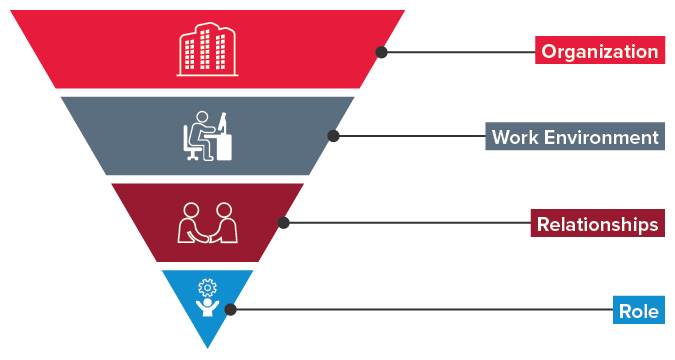
Words and actions of senior management, market position, values people philosophy, ethics, mission, reputation, customer enthusiasms, vision, culture, company financial performance, brand, business priorities, corporate communication.
Physical work environment, work group priorities and plans, safety, resources and tools, people management practices and processes, compensation, career advancement opportunities, business processes and practices, HR policies/processes
Relationships with supervisor/manager, informal communication, norms around psychological safety, relationships with colleagues, teamwork and collaboration, authenticity/inclusion, recognition, ongoing feedback, customer interaction.
Job scope, competence for the role, personal motivation, ability to learn and grow, autonomy, influence, line of sight — linkage to larger organization strategy and plan.
Company Culture Assessment Case Study
To illustrate the impact of a culture assessment, consider our work with a global supply chain software company aiming to become a billion-dollar enterprise. Leadership recognized the need to evaluate which aspects of their current culture supported growth and which required transformation. Initial findings revealed that employees felt disconnected from the company’s values, culture, and strategy.
BDO collaborated with the organization to address these challenges by facilitating one-on-one meetings with executive leaders and conducting focus groups across global, cross-functional teams. Through these conversations, we uncovered both strategic and cultural issues. Employees were invested in maintaining existing strengths but struggled to envision the future.
Our assessment provided practical recommendations, enabling leaders to define a set of shared values that resonated with employees and supported international expansion. By aligning the culture with the company’s growth ambitions, BDO helped lay the foundation for a more engaged workforce and sustainable success.
This case study demonstrates how a targeted cultural assessment can spark meaningful change and set the stage for broader transformation. But what does it take to move from assessment to lasting impact? That’s where cultural transformation comes in.
What is Culture Transformation?
Culture transformation is about building a movement that solicits the hearts and minds of your employees to encourage positive mindsets, behaviors, and norms that propel your organization forward. Cultures that maintain Deep Trust and High Expectations® are proven to deliver better results for both their business and people. At the end of the day, it’s all about working with the same end goal in mind.
Why Companies Change Their Culture
Simply put, a positive work environment drives stronger company performance. When organizational culture fails to evolve with the changing needs and expectations of employees, the effects are difficult to hide. A negative reputation can deter top talent from joining your organization and make it harder to retain your current employees.
By not cultivating a strong, adaptive culture, organizations risk missing out on valuable candidates and losing existing talent. Moreover, since company performance is closely linked to employee satisfaction and well-being, the success of your business is directly tied to the strength of your culture.
Communicating Culture Change
Clear and effective communication is vital for securing buy-in and driving the success of any culture change initiative. To truly engage employees as active participants in the transformation, it’s important to go beyond sharing the details: Communicate the purpose behind the change, why it’s happening, and why it matters now.
Embrace Human, Compelling, Visual Communications™ to make your messages resonate. Use storytelling, visuals, and transparent dialogue to connect with employees on a personal level and foster understanding. Consider your tone, key messages, and the degree of openness you bring to each interaction. When employees feel included and empowered to contribute, they become champions of change.
Remember, culture change isn’t something done to people—it’s accomplished with and through them. Communication should be an integral part of a broader strategy that supports cultural sustainability and ongoing employee engagement. For more guidance, explore Human, Compelling, Visual Communications™ from BDO.
Strategies to Build Company Culture That Sticks
As you move toward implementing your culture change initiative, it’s crucial to adopt strategies that support long-term success. Here are several recommended approaches:
- Align business and culture strategies: Ensure your culture strategy complements and reinforces your overall business objectives.
- Focus on key behaviors: Prioritize specific areas of behavior change to maximize impact and maintain a realistic approach.
- Develop a roadmap: Recognize that culture change is a journey. Plan and sequence your efforts so employees can connect the dots throughout the experience.
- Integrate culture into the talent lifecycle: Embed cultural priorities into processes such as performance management and employee development.
- Leverage existing strengths: Identify and build upon the strengths already present in your organization to shape your future-state culture.
- Measure progress: Introduce key metrics and interventions to track and evaluate the success of your culture change efforts.
Culture is dynamic and requires ongoing attention and nurturing. Sustainable change happens over time, with continued engagement from your teams driving progress and high performance.
The Relationship Between Company Culture and Leadership
The connection between culture and leadership is profound – organizations with highly effective, engaged leaders experience up to a 70% improvement in culture quality. Leaders set the tone for workplace norms by modeling desired behaviors for others to follow. By aligning leadership around a shared vision and purpose, and clarifying how culture drives future business success, you empower managers to lead by example.
To encourage leaders to take an active role in culture change:
Elevate Your Company Culture
A thriving company culture delivers powerful lasting benefits. If you’re ready to drive meaningful culture change, BDO’s approach can help your organization achieve its goals. We work closely with your team to deliver the outcomes you envision, guiding you through every state of the journey:
- Assess: We begin by diagnosing your current company culture, gathering candid insights from employees about present realities, as well as their hopes and aspirations for the future. We work with leadership to align on the value and opportunities of building a well-integrated, high-performance culture.
- Articulate: Together, we define and align around the behavioral expectations that support a shared vision and unified mindset. We communicate these expectations in ways that inspire and mobilize your employees, laying the foundation for a high-performing team.
- Activate: We develop a comprehensive strategy and actionable work plan to strengthen your culture and employee experience across the organization at both the enterprise and business unit levels. Our approach supports leader buy-in and empowers effective leadership involvement.
- Accelerate: We help you put your strategy into action, serving as a collaborative advisor to drive your organization forward and help ensure lasting change.
- Align: Throughout the process, we help ensure stakeholders at every level understand the “what” and “why” of your culture journey every step of the way.
Creating a Movement: The 5 A's of Culture Transformation
Ready to start building a high-performance culture in your company? Connect with BDO’s People, Strategy & Solutions team to schedule a culture assessment today.
Frequently Asked Questions (FAQ)
Company culture is the shared values, behaviors, and expectations that influence how employees think, act, and make decisions at work.
Because it affects engagement, retention, productivity, and performance – and research shows that most executives (92%) view culture as critical to business success.
A significant one. Studies cited in the guide show organizations with highly effective, engaged leaders may achieve up to 70% improvement in overall culture quality.
Yes. Culture evolves through leadership behavior, shared values, consistent communication, and reinforcement over time.
A strong culture combines psychological safety – where employees feel respected and supported – with clear standards for performance and accountability. This balance, sometimes described as Deep Trust and High Expectations®, helps organizations sustain both engagement and results.
SHARE