Case Study

Leveraging Our Customs Experience for Strategic Tariff Savings

How Manufacturing Relocation and a CBP Ruling Helped a Grill Importer Reduce Duty Exposure

SUMMARY/OVERVIEW

Strategic Country of Origin Planning: Reducing Tariffs Through Manufacturing Changes

Tariffs apply to nearly all products imported into the U.S. However, within the intricate framework of U.S. Customs laws and regulations, companies may legally and strategically alter a product’s country of origin by relocating or modifying specific manufacturing processes. Changes that meet specific origin determination criteria — such as the “substantial transformation” standard or relevant trade agreement provisions — may reduce or even eliminate tariff obligations.

For one importer of propane grills, strategically relocating certain manufacturing and assembly operations led to significant and sustained tariff savings. The decision was neither simple nor unilateral. Our team provided in-depth research, extensive customs experience, and practical guidance to support the company’s efforts. Backed by a binding ruling from U.S. Customs and Border Protection (CBP), the importer implemented a compliant and effective tariff mitigation strategy.

Key Takeaways

Eliminated tariffs

Eliminated the 25% Section 301 China tariffs    

Cost savings

Saved an additional 30% of the China IEEPA fentanyl and reciprocal tariffs

Future Preparedness

Prepared to mitigate the impact of any future tariffs on goods from China 
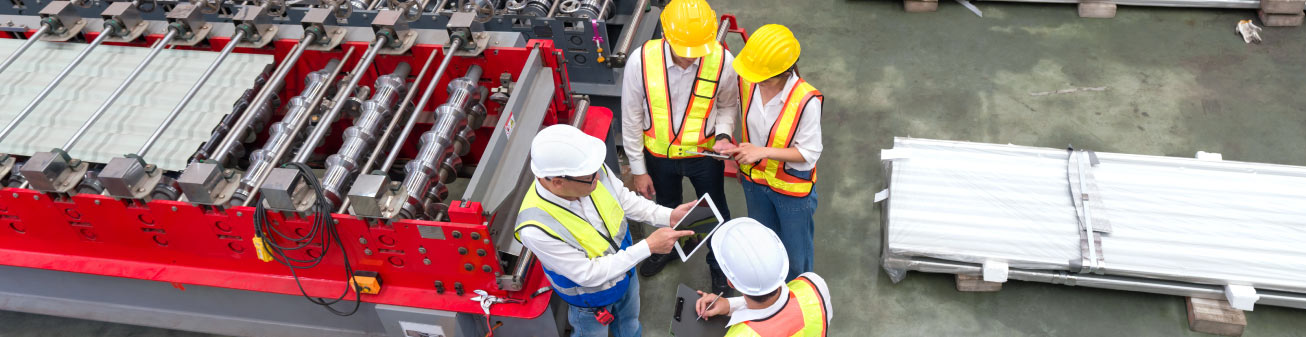
Warehouse employees discussing over a tablet.
The Challenge

Section 301 China Tariffs Put Pressure on a U.S. Importer’s Profitability

Our client, a U.S. importer of propane gas grills from China, was subject to the 25% Section 301 tariffs on Chinese-origin goods. Seeking to reduce current duty exposure and mitigate the risk of future tariffs, the company turned to us for guidance. While several potential strategies were available, identifying a viable path forward required a deep understanding of U.S. Customs laws, regulations, and rulings. The company needed to explore its options and begin developing a compliant, long-term tariff mitigation strategy grounded in country of origin planning and supply chain restructuring.

White barrels in a line.
The Approach

Strategic Research Results in Favorable Country of Origin Ruling

This project required deep knowledge of customs laws and regulations, as well as product engineering and specifications. Our Customs and International Trade Services (CITS) team began with a comprehensive analysis of the importer’s supply chain and manufacturing operations. This critical first step helped the team identify opportunities for legally shifting the country of origin under U.S. Customs rules. 

We assessed potential relocation scenarios against the “substantial transformation” standard, which U.S. Customs uses to determine a product’s country of origin. Drawing on our deep customs knowledge, we guided the client through the viable operational steps required to restructure qualifying processes in a new jurisdiction. This included preparing supporting documentation, coordinating with CBP, and ultimately securing a binding ruling to validate the strategy.

Person closing a grill cover.
The Results

Achieving a 100% Reduction in China-Related Tariffs 

Before consulting our CITS team in 2023, the U.S. importer’s propane grills were subject to Section 301 China tariffs of 25% on the value of the merchandise. By implementing our recommended manufacturing scenario — validated through a favorable country of origin ruling from CBP — the client successfully reclassified the country of origin for its imported grills, resulting in full elimination of the applicable tariffs.

The savings continue as of the publication of this case study. Following the February 2025 implementation of new tariffs on China-origin goods under the International Emergency Economic Powers Act (IEEPA), the client’s strategy has proven both resilient and increasingly valuable. Under the CBP ruling, the grills are now classified as products of another country — exempting them from Section 301 and other China-related tariffs. Based on current tariff policy and rules, our team’s country of origin strategy helped the client avoid paying between 55% and 170% in duties on its merchandise.

"Leveraging our deep experience in U.S. Customs laws and regulations, we guided the client through a complex and evolving process. Our strategic approach ultimately enabled the client to eliminate China-related tariffs on imported merchandise, delivering substantial cost savings."
James Pai
Managing Director, Customs & International Trade Services

More Successful Studies

Check out other client success stories.

  • Industry
  • Auto Dealerships
  • Financial Institutions & Specialty Finance
  • Fintech
  • Gaming & Leisure
  • Government & Public Sector
  • Healthcare
  • Insurance
  • Life Sciences
  • Manufacturing
  • Nonprofit & Education
  • Private Equity
  • Professional Services
  • Real Estate & Construction
  • Restaurants
  • Retail & Consumer Products
  • Technology

No Results Found