Case Study

Transforming Operations Through Smarter Systems: Unlocking $12 Million in Cost Savings

How a Food Manufacturer Modernized Its Processes and ERP To Drive Efficiency and Accuracy

SUMMARY/OVERVIEW

Asking the Right Questions

Asking the right questions makes all the difference in transforming a business. When a global food manufacturer began asking if their enterprise resource management (ERP) system was adequate to handle their growing needs, our team stepped in to review the client’s technology, processes, and operations to deliver improvements that led to over $12 million in annual cost savings.

Key Takeaways

Cost savings

Over $12 million in annual cost savings resulting from a streamlined tech stack and improved financial, production, and inventory data.

Data accuracy

Thousands of hours gained and real-time decision making enabled, as manual data reconciliation, entry, and analysis were eliminated through improved data accuracy across departments.

Inventory tracking

Enhanced inventory tracking with auditable documentation for contractual and regulatory requirements.


Meat packer with checklist
The Challenge

Overcoming Disconnected Systems That Limited Growth and Data Accuracy

When the client approached our team, they were using various disconnected systems, with data that didn’t align and wasn’t integrated into their primary ERP system. Despite NetSuite being deployed in their operating environment, the client lacked the proper configurations. and processes for the platform to meet their growing manufacturing and business needs. Additionally, the disparate nature of the different applications they were using meant that data entry was largely performed through time-consuming, manual work prone to entry errors, requiring hours of reconciliation and analysis to gain a holistic picture of the business. The client had also acquired an overabundance of software platforms that lacked proper electronic data interchange (EDI), meaning that data didn’t automatically flow into NetSuite.

As our team began reviewing the client’s technology, we recognized that the underlying challenges were more than a technology issue — they were business challenges manifesting through their technology. One area of particular concern was how the company was storing its quality metrics. The client had three disconnected systems tracking quality, none of which fed into NetSuite. While not uncommon for companies to use a separate quality system, the lack of connection into the central ERP meant that critical information wasn’t readily available to the other systems that needed it.

Two meat packers in manufacturing facility
The Approach

Building the Operational Foundation Needed to Fully Leverage NetSuite

We began our work assessing the client’s policies related to their operations, supply chain, and technology platforms. Our team quickly realized that changes to their existing technology would only make small, incremental impacts to the client’s costs. To realize a meaningful cost savings, the business needed to change several essential operations to create a foundation for improved technology solutions.

  1. One of the processes we helped improve was how the food manufacturer handled material requirements planning (MRP). We helped the client assess what materials and resources they needed at the plant level, for both their U.S. and European facilities, where production occurred, rather than relying on a system or piece of software that was making predictions using incomplete or inaccurate data. We also reviewed and helped implement good manufacturing practices (GMP), as required by the FDA, to align their operations with industry standards and help mitigate risks in production.

  2. Additionally, we also changed how the food manufacturer approached business technology. Over time, the client had added new software and platforms to address individual business needs rather than configuring existing tools, leading to numerous, expensive contract agreements. Because these systems remained disconnected from NetSuite and lacked proper electronic data interchanges (EDI), employees needed to enter data manually in key systems. This led to both quality-control and inventory issues, as the information only became available within NetSuite after manual processing.

  3. Our team helped the client unlock NetSuite’s capabilities to address their operational needs while configuring their quality-control and inventory management EDI to provide an accurate, real-time view of their data. NetSuite further helped to eliminate errors stemming from manual entry by creating a single source of truth, outlining what items should be present within the inventory prior to counting them — something the old process and system wasn't doing. For example, within the food industry, items often need to be quarantined, temporarily moving them out of available inventory until they're tested and quality-checked. By configuring the company’s quality system to feed data into NetSuite automatically, the client had up-to-date inventory numbers readily available, including the inventory that was awaiting quality testing. From there, NetSuite also provided enhanced tracking features that assigned numeric values to each item and maintained a record of where it was physically located.

  4. The issue of understanding inventory in transit and its location was a key area that we were able to improve for the client through NetSuite. Modern MRP platforms like NetSuite can handle timing issues and account for inventory in transit, so even if a pallet of goods isn't present at a warehouse because it’s currently being moved from a plant to a warehouse, the system automatically reconciles that.

    Because NetSuite had already accounted for all inventory — even items in transit — the client no longer needed to perform hourly manual inventory checks and make decisions on potentially inaccurate data since the system was already accurately accounting for inventory levels.

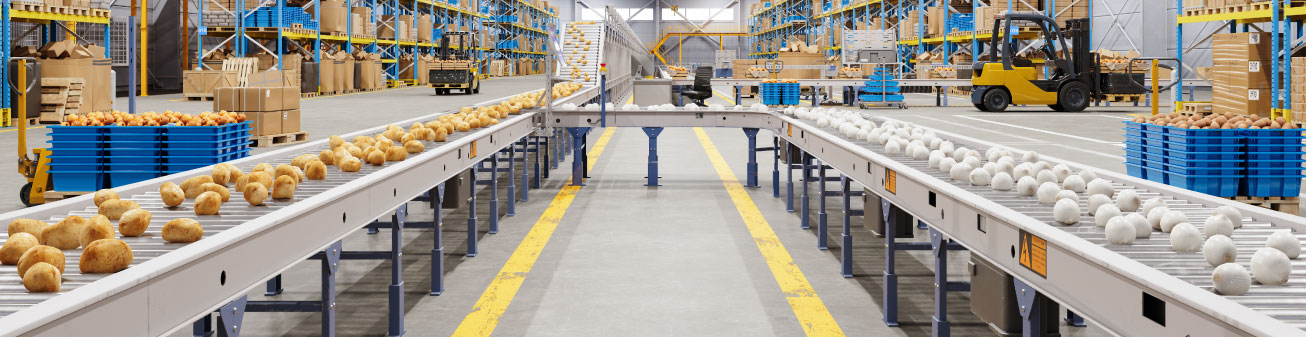
Food manufacturing facility
The Results

A Streamlined Technology Ecosystem That Delivered Millions in Savings

"By combining the right processes with NetSuite’s powerful MRP capabilities, our team was able to help the client realize millions of dollars in savings and greater efficiencies in their inventory management, reporting, and auditing capabilities."
Bill Grady
BDO Senior Manager

More Successful Studies

Check out other client success stories.

  • Industry
  • Auto Dealerships
  • Financial Institutions & Specialty Finance
  • Fintech
  • Gaming & Leisure
  • Government & Public Sector
  • Healthcare
  • Insurance
  • Life Sciences
  • Manufacturing
  • Natural Resources
  • Nonprofit & Education
  • Private Equity
  • Professional Services
  • Real Estate & Construction
  • Restaurants
  • Retail & Consumer Products
  • Technology

No Results Found