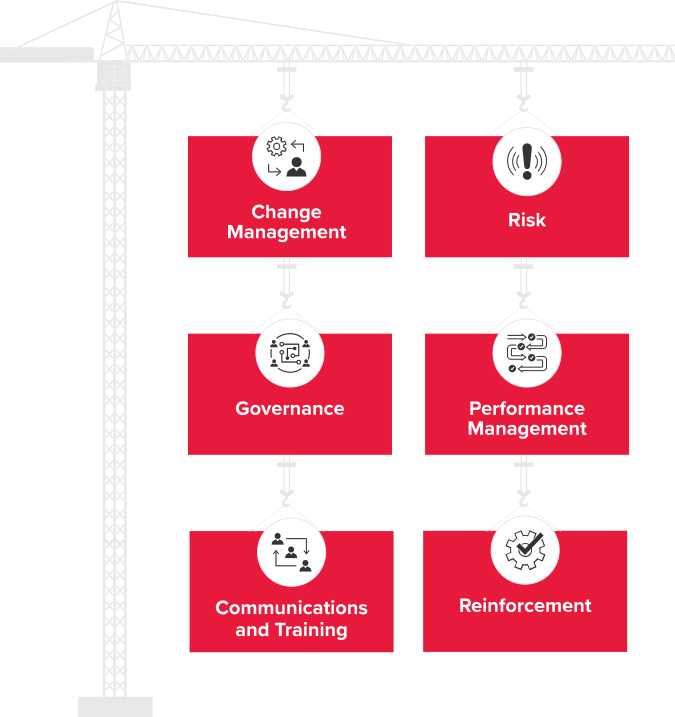
Outputs Are the Visible Half of a Plan; the Disciplines Are the Half That Operates It
A strategic plan and its artifacts—the roadmap, goal framework, and dashboard design—are outputs. They are what an organization adopts and files. The six disciplines are different: they make those outputs operate once the planning team has gone. Each produces something concrete, activates at a particular point in the engagement, and creates a specific cost when it is absent. Yet these disciplines leave few visible artifacts on the day a plan is adopted, which is part of why they are so easy to leave out of the request.
One clarification matters before we name the disciplines: a given plan does not need all six at full weight. The number of disciplines required, and the emphasis placed on each, depends on the type of plan—a distinction we take up later in the series. The larger failure is not under-resourcing one discipline; it is commissioning a plan without the disciplines it needs. When the full operating layer is absent, the plan is not simply missing a handful of features. It is missing the structures that would turn it into something the organization runs on.
Change Management Turns a Decision Into a Behavior
Change management is the discipline that moves a plan from agreement to action. It establishes the sponsorship, stakeholder engagement, and readiness activities that help people understand what is changing and what their role will be. It activates across the engagement and carries particular weight at and after handoff, when the plan meets the people who have to put it into practice. Without it, a plan may be adopted on paper but fail to influence daily behavior. Leaders align in the room, the announcement goes out, and within weeks the organization returns to familiar ways of working.
Risk Discipline Keeps a Plan Honest About What Could Derail It
Risk discipline creates an ongoing view of what could disrupt a plan and what the organization should do to respond. It produces a live register that defines the risks and assigns ownership, not a one-time appendix that is filed and forgotten. It activates at the baseline and runs continuously. Without it, the plan quietly assumes a frictionless world. The first real shock —a funding shift, a change in leadership, an initiative that stalls —arrives with no mechanism to absorb it, and a plan that looked sound is overtaken by circumstances it failed to anticipate.
Governance Decides Who Keeps the Plan Alive After Handoff
Governance is the set of decision rights and review rhythms that keep a plan in front of the people who lead the organization. It produces clear ownership of the plan, a defined way to decide on changes to it, and a standing place on a real agenda. Governance activates at adoption and persists indefinitely. Without it, accountability becomes unclear once the engagement ends. The plan has no consistent forum, no defined owner, and no scheduled moment of attention, allowing decisions to drift away from it for the simple reason that nothing ever pulls them back.
Performance Management Keeps a Plan Connected to Results
Performance management establishes the measures and review cadence that show whether a plan is producing the intended results. It connects each measure to a consistent forum for reviewing progress, identifying gaps, and determining when action is needed, not simply to a list of indicators included in the plan. The discipline begins at adoption and continues throughout implementation. Without it, metrics may exist but remain disconnected from decision-making, allowing performance to move away from the plan’s priorities before leaders recognize the gap. Defining the measures is only the starting point; consistently using them to guide decisions is the discipline.
Communications and Training Move a Plan From the Few to the Many
The communications and training discipline carries a plan from the small group that built it to the much larger group responsible for putting it into practice. It produces role-specific communication, manager enablement, and the training that turns new expectations into actual capability. It activates at adoption and continues throughout implementation. Without it, the plan lives with the leadership team that made it and never reaches the people whose daily decisions it was written to guide. A strategy understood only at the top is not adopted across the organization. It remains known by a few rather than embraced by many.
Reinforcement Keeps a Plan Embedded in Organizational Practice
Reinforcement is the discipline that embeds a plan in the systems and practices that sustain organizational priorities over time. It produces the connections that weave a plan into the systems that run continuously: budgeting, hiring, onboarding, and recognition. The discipline activates last and runs longest, continuing well past handoff. Without it, a plan may guide decisions for a period but gradually lose influence as established systems and routines reassert themselves. This is how many strong strategies lose momentum after a successful launch. The structures needed to sustain accountability and execution are often excluded because their absence is not immediately felt. By the time the resulting gaps become visible, the opportunity to apply the supporting disciplines to address them has already passed.
Making a Plan Stick Is a Discipline Problem, Not an Effort Problem
None of this diminishes the value of a capable team or a responsive approach. Both matter, and a transformation without them can struggle. But they do not determine whether a plan is still steering decisions a year later. That depends on whether the disciplines that operate the plan were built into the work or deferred to a later implementation that may never be funded. Capability and responsiveness are necessary. They are not sufficient.
The practical question is how to build these disciplines into the work from the beginning, which requires a closer look at how strategy is commissioned. That is where the series turns next. The disciplines do not appear on their own; they must be intentionally scoped into the effort. Our aim is straightforward: to help organizations commission plans with the disciplines needed to operate them, so the plan a board adopts continues to guide decisions long after adoption.